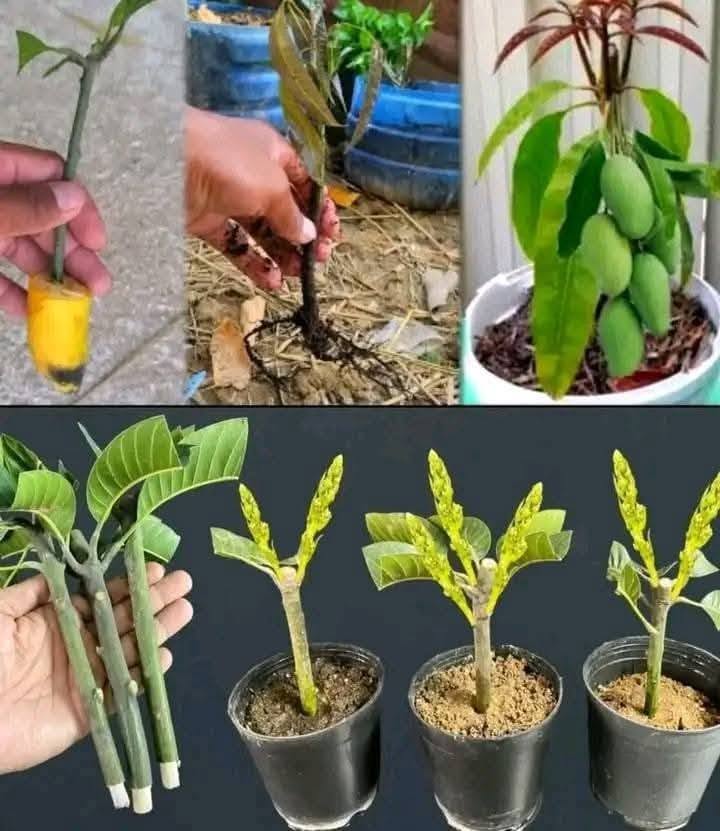
Step 9: Maintain Moisture Carefully
Check the propagation mix regularly.
It should remain slightly moist but never saturated. Water only when the upper surface begins to feel dry.
Too much water may cause the lower stem to rot, while allowing the medium to dry completely can kill the cutting.
Condensation inside the plastic cover is normal. However, if water is constantly dripping from the cover, open it briefly to improve ventilation.
Step 10: Wait for Root Development
Mango cuttings may take several weeks or even a few months to develop roots.
Signs of possible success include:
The stem remains firm and green
The leaves do not completely collapse
New buds begin to swell
Small new leaves appear
The cutting resists a very gentle pull
Do not repeatedly pull the cutting to check for roots. This can damage delicate new growth.
New leaves alone do not always prove that roots have formed, since the cutting may use stored energy to produce temporary growth. Continue caring for it until it shows steady development.
Step 11: Gradually Remove the Humidity Cover
Once the cutting appears established, begin removing the plastic cover gradually.
Open the cover for one or two hours on the first day. Increase the exposure time over several days until the plant can remain uncovered without wilting.
Removing the cover suddenly may cause rapid moisture loss and stress the young plant.
Step 12: Transplant the Rooted Cutting
When the cutting has developed a healthy root system and begins producing stable new growth, move it into a slightly larger container.
Use a fertile but well-draining potting mix containing:
Quality potting soil
Compost
Perlite or coarse sand
A small amount of coco coir
Handle the roots carefully. Young mango roots can be fragile and should not be disturbed unnecessarily.
Plant the cutting at the same depth it was growing previously.
How to Care for the Young Mango Tree
Once established, the young tree needs warmth, light, proper watering, and gradual feeding.
Light
Provide bright light and slowly introduce the tree to direct sunlight. Begin with gentle morning sun before exposing it to stronger afternoon light.
A mature mango tree generally grows best in full sun.
Watering
Water deeply, then allow the top layer of soil to dry slightly before watering again.
Do not leave the pot standing in water. Constantly wet soil can lead to root problems.
Fertilizing
Wait until the cutting is actively producing new growth before applying fertilizer.
Use a mild, balanced fertilizer at reduced strength. Avoid overfeeding a young plant because excessive fertilizer may burn its developing roots.
Temperature
Protect the young mango tree from cold temperatures, frost, and strong wind.
Mango trees prefer warm tropical or subtropical conditions. In cooler regions, they can be grown in containers and moved indoors during winter.
Common Problems and How to Avoid Them
The Cutting Turns Black at the Base
A black or soft stem usually indicates rot.
Possible causes include:
Excessive watering
Poor drainage
Contaminated tools
Heavy potting soil
Insufficient airflow
Use sterile equipment, a porous growing medium, and careful watering.
The Leaves Wilt Quickly
Some initial wilting is common, but severe wilting may indicate low humidity, excessive heat, or insufficient moisture.
Check that the plastic cover is secure and move the pot away from direct sunlight.
The Cutting Dries Out
A cutting may dry out when humidity is too low or the growing medium is allowed to become completely dry.
Inspect the pot regularly, especially during warm weather.
Mold Appears
Mold may develop when humidity is high and air circulation is poor.
Remove affected dead leaves, reduce excess moisture, and open the cover briefly each day.
New Growth Appears but Later Dies
The cutting may have used stored energy to produce leaves before developing enough roots.
Continue maintaining humidity and avoid transplanting too early.
Tips for Improving the Success Rate
Prepare several cuttings rather than relying on only one. This increases the likelihood that at least one will root.
Take cuttings early in the morning when the branches are well hydrated. Plant them as soon as possible after removal.
Use clean tools and fresh propagation mix to reduce the risk of infection.
Maintain steady warmth. A propagation heat mat can be useful in cooler conditions, provided the growing medium does not become excessively hot.
Avoid disturbing the cutting during the rooting period. Patience is essential.
Can You Root a Mango Cutting in Water?
A mango cutting may remain alive in water for a short period, but water propagation is generally less reliable for this type of tree.
Cuttings rooted in water can also develop delicate roots that struggle when transferred to soil. A well-draining propagation medium usually provides better support, airflow, and moisture balance.
How Long Does a Mango Cutting Take to Root?
The rooting period varies considerably.
Under warm and humid conditions, early root development may begin within six to twelve weeks. Some cuttings may require longer, and others may never root.
The mango variety, age of the branch, temperature, humidity, and preparation method all influence the result.
When Will a Mango Tree Grown from a Cutting Produce Fruit?
A successfully rooted mango tree may still need several years before producing fruit.
The exact time depends on:
The variety
Local climate
Sun exposure
Soil quality
Container size
Fertilization
General tree health
Growing a tree from a cutting may help preserve the parent variety, but it does not guarantee immediate fruit production.
Is Grafting Better Than Growing from Cuttings?
For many gardeners, grafting is the more reliable method of propagating mango trees.
A grafted tree combines a vigorous rootstock with a fruit-producing variety. This method is widely used because it offers predictable fruit characteristics and strong root development.
Cuttings can still be attempted as a gardening experiment, especially when several healthy branches are available. However, grafting may be preferable when dependable results are the main priority.
Final Thoughts
Growing a mango tree from a cutting is possible, but it requires careful preparation, steady warmth, high humidity, and plenty of patience. The most important steps are choosing a healthy semi-hardwood branch, using a light propagation mix, preventing moisture loss, and avoiding overwatering.
Because mango cuttings can be difficult to root, prepare several at once and do not expect every cutting to survive. Even one successfully rooted plant can become a beautiful tropical tree with glossy foliage and, under the right conditions, delicious fruit in the years ahead.